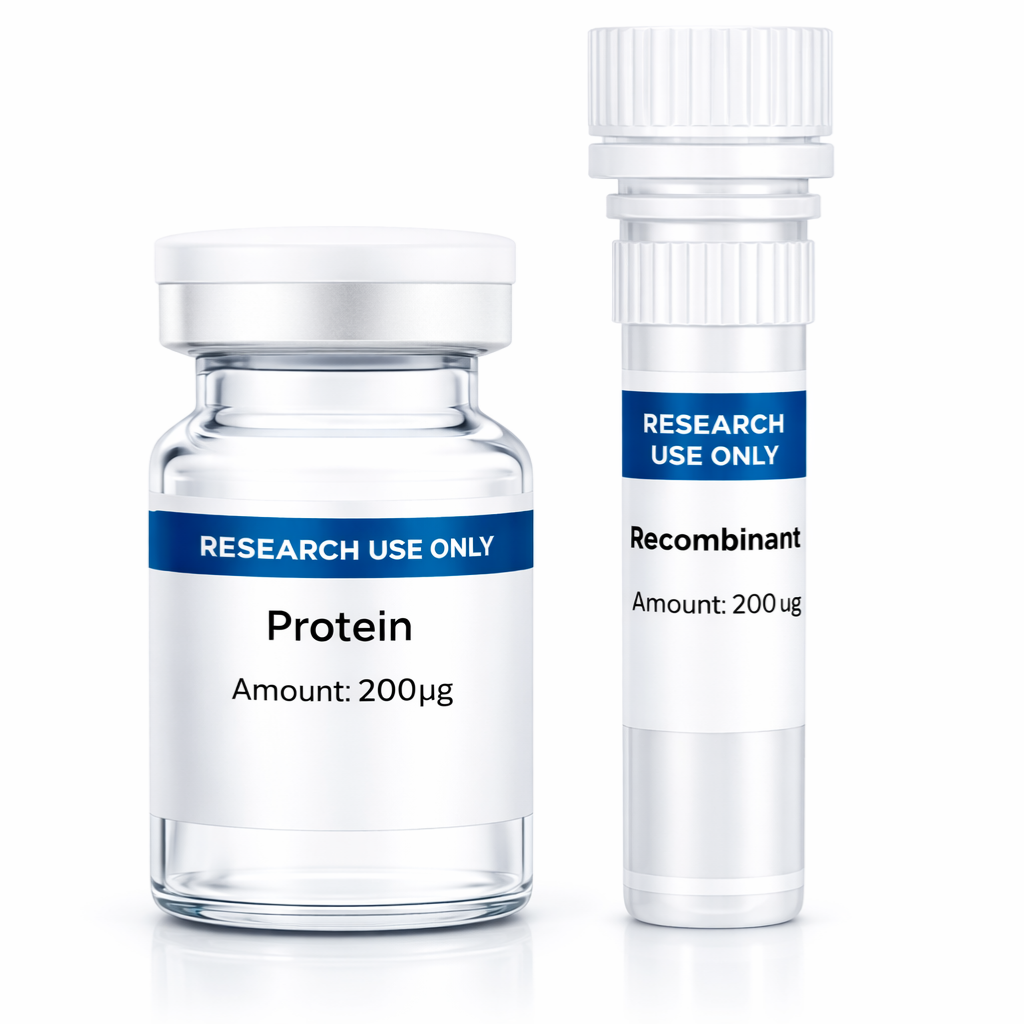
|
TNF a Rat |
|
Alternative Names |
TNF-alpha, Tumor necrosis factor ligand superfamily member 2, TNF-a, Cachectin, DIF, TNFA, TNFSF2. |
|
Appearance |
Sterile Filtered White lyophilized (freeze-dried) powder. |
|
Biological Activity |
The ED50 as determined by the cytolysis of murine L929 cells in the presence of Actinomycin D is < 0.05ng/ml, corresponding to a Specific Activity of 20,000,000 IU/mg. |
|
Purity |
Greater than 95.0% as determined by: Analysis by RP-HPLC. | Analysis by SDS-PAGE. |
|
Formulation |
The concentrated protein solution (1mg/ml) was lyophilized from 20mM phosphate buffer and 0.1M NaCl. |
|
Description |
Tumor Necrosis Factor-a Rat Recombinant produced in E.Coli is a single, non-glycosylated, polypeptide chain containing 157 amino acids and having a molecular mass of 17339.44 Dalton. The TNF-alpha is purified by standard chromatographic techniques. |
|
Stability |
Lyophilized Tumor Necrosis Factor-a although stable at room temperature for 3 weeks, should be stored desiccated below -18°C. Upon reconstitution TNF-a should be stored at 4°C between 2-7 days and for future use below -18°C.For long term storage it is recommended to add a carrier protein (0.1% HSA or BSA).Please prevent freeze-thaw cycles. |
|
Solubility |
It is recommended to reconstitute the lyophilized Tumor Necrosis Factor-alpha in sterile 18M-cm H2O not less than 100µg/ml, which can then be further diluted to other aqueous solutions |
|
Introduction |
Tumor necrosis factor is a cytokine involved in systemic inflammation and is a member of a group of cytokines that all stimulate the acute phase reaction. TNF is mainly secreted by macrophages. TNF causes apoptotic cell death, cellular proliferation, differentiation, inflammation, tumorigenesis and viral replication, TNF is also involved in lipid metabolism, and coagulation. TNF's primary role is in the regulation of immune cells.
Dysregulation and, in particular, overproduction of TNF have been implicated in a variety of human diseases- autoimmune diseases, and cancer. |