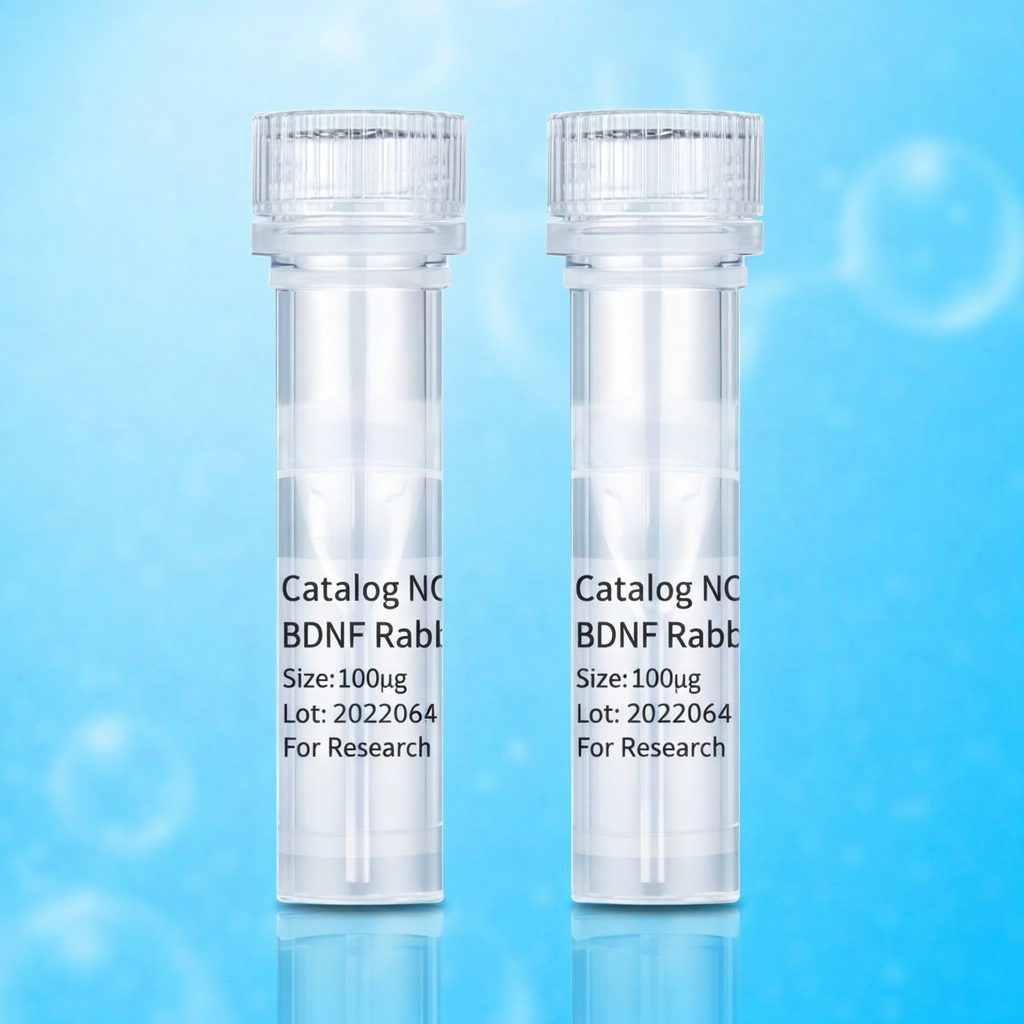
|
PPAR Gamma Antibody |
|
Description |
Rabbit Polyclonal Antibody To PPAR gamma |
|
Mol.Wt |
55-70kDa(Observed); 58kD(Calculated) |
|
Uniprot |
P37231 |
|
Application |
WB 1:500-1:2000, IHC 1:50-1:200, IF/ICC 1:100-1:500 |
|
Clonality |
Polyclonal |
|
Specificity |
PPAR gamma Antibody detects endogenous levels of total PPAR gamma. |
|
Conjugate |
Unconjugated. |
|
Purification |
The antiserum was purified by peptide affinity chromatography using SulfoLink™ Coupling Resin. |
|
Storage |
Rabbit IgG in phosphate buffered saline , pH 7.4, 150mM NaCl, 0.02% sodium azide and 50% glycerol. Store at -20 °C. Stable for 12 months from date of receipt |
|
Alternative Name |
CIMT1; GLM1; NR1C3; Nuclear receptor subfamily 1 group C member 3; OTTHUMP00000185032; OTTHUMP00000185036; Peroxisome proliferator activated nuclear receptor gamma variant 1; Peroxisome proliferator activated receptor gamma 1; Peroxisome Proliferator Activated Receptor gamma; Peroxisome proliferator-activated receptor gamma; PPAR gamma; PPAR-gamma; PPARG; PPARG_HUMAN; PPARG1; PPARG2; PPARgamma |
|
Immunogen |
A synthesized peptide derived from human PPAR gamma, corresponding to a region within the internal amino acids. |
|
Gene(ID) |
PPARG(5468) |
|
Uniprot |
P37231(PPARG_HUMAN) |
|
Expression |
P37231 PPARG_HUMAN: Highest expression in adipose tissue. Lower in skeletal muscle, spleen, heart and liver. Also detectable in placenta, lung and ovary. |
|
Description |
The protein encoded by this gene is a member of the peroxisome proliferator-activated receptor (PPAR) subfamily of nuclear receptors. PPARs form heterodimers with retinoid X receptors (RXRs) and these heterodimers regulate transcription of various genes. Three subtypes of PPARs are known: PPAR-alpha, PPAR-delta, and PPAR-gamma. |
|
Subcellular Location |
Nucleus. Cytoplasm |
|
Tissue Specificity |
Highest expression in adipose tissue. Lower in skeletal muscle, spleen, heart and liver. Also detectable in placenta, lung and ovary. |
|
Family & Domains |
The 9aaTAD motif is a transactivation domain present in a large number of yeast and animal transcription factors. Belongs to the nuclear hormone receptor family. NR1 subfamily. |
|
Function |
Nuclear receptor that binds peroxisome proliferators such as hypolipidemic drugs and fatty acids. Once activated by a ligand, the nuclear receptor binds to DNA specific PPAR response elements (PPRE) and modulates the transcription of its target genes, such as acyl-CoA oxidase. It therefore controls the peroxisomal beta-oxidation pathway of fatty acids. Key regulator of adipocyte differentiation and glucose homeostasis. ARF6 acts as a key regulator of the tissue-specific adipocyte P2 (aP2) enhancer. Acts as a critical regulator of gut homeostasis by suppressing NF-kappa-B-mediated proinflammatory responses. Plays a role in the regulation of cardiovascular circadian rhythms by regulating the transcription of ARNTL/BMAL1 in the blood vessels (By similarity). |
|
PTMs |
O-GlcNAcylation at Thr-84 reduces transcriptional activity in adipocytes. Phosphorylated in basal conditions and dephosphorylated when treated with the ligand. May be dephosphorylated by PPP5C. The phosphorylated form may be inactive and dephosphorylation at Ser-112 induces adipogenic activity (By similarity). |