|
Human ACSL4(Long-chain-fatty-acid–CoA ligase 4) ELISA Kit |
|
Sensitivity |
18.75pg/ml |
|
Range |
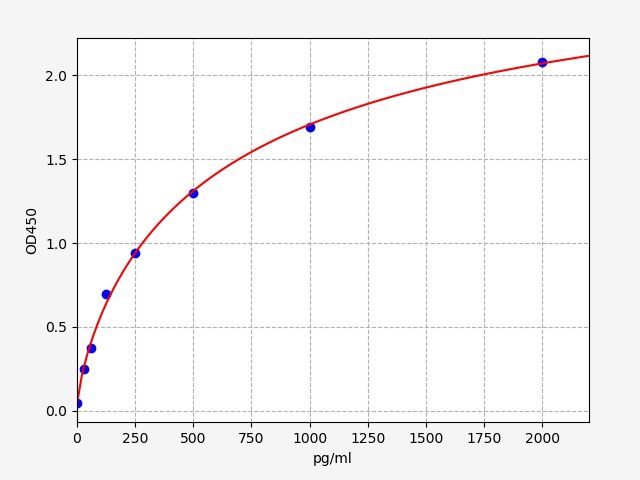
31.25-2000pg/ml |
|
Alternative Name |
Long-chain-fatty-acid--CoA ligase 4 ELISA Kit, Arachidonate--CoA ligase ELISA Kit, Long-chain acyl-CoA synthetase 4 ELISA Kit, LACS 4 ELISA Kit, ACSL4 ELISA Kit, ACS4 ELISA Kit, FACL4 ELISA Kit, LACS4 ELISA Kit |
|
UniProt ID |
O60488 |
|
Sample Type |
Serum, Plasma, Cell Culture Supernatant, cell or tissue lysate, Other liquid samples |
|
Detection Method |
Sandwich ELISA, Double Antibody |
|
Wavelength |
OD450 |
|
Reaction Duration |
4 hours |
|
Storage |
2-8°C(Sealed), Don't cryopreserve. |
|
Specificity |
Specifically binds with ACSL4/FACL4 , no obvious cross reaction with other analogues. |
|
Principle |
This kit is based on Competitive-ELISA detection method and takes 2h assay time. The microplate provided in this kit has been precoated with PGE2. PGE2 in the sample or standard competes with a fixed amount of biotin-labeled PGE2 for sites on a pre-coated antibody specific to PGE2. Free components are washed off. After adding HRP-Streptavidin Conjugate (SABC), biotin specifically binds with streptavidin to form immune complexes. Wash off unbound conjugate. Add TMB substrate solution. Then, TMB was catalyzed by HRP to produce a blue color product that turned yellow after adding a stop solution. Read the O.D. absorbance at 450nm in a microplate reader. Compare OD450 value of sample with the standard curve through curve fitting software to determine the concentration of PGE2 in the sample. The concentration of the target substance is inversely proportional to the OD450 value. |
|
Validated Image |
|