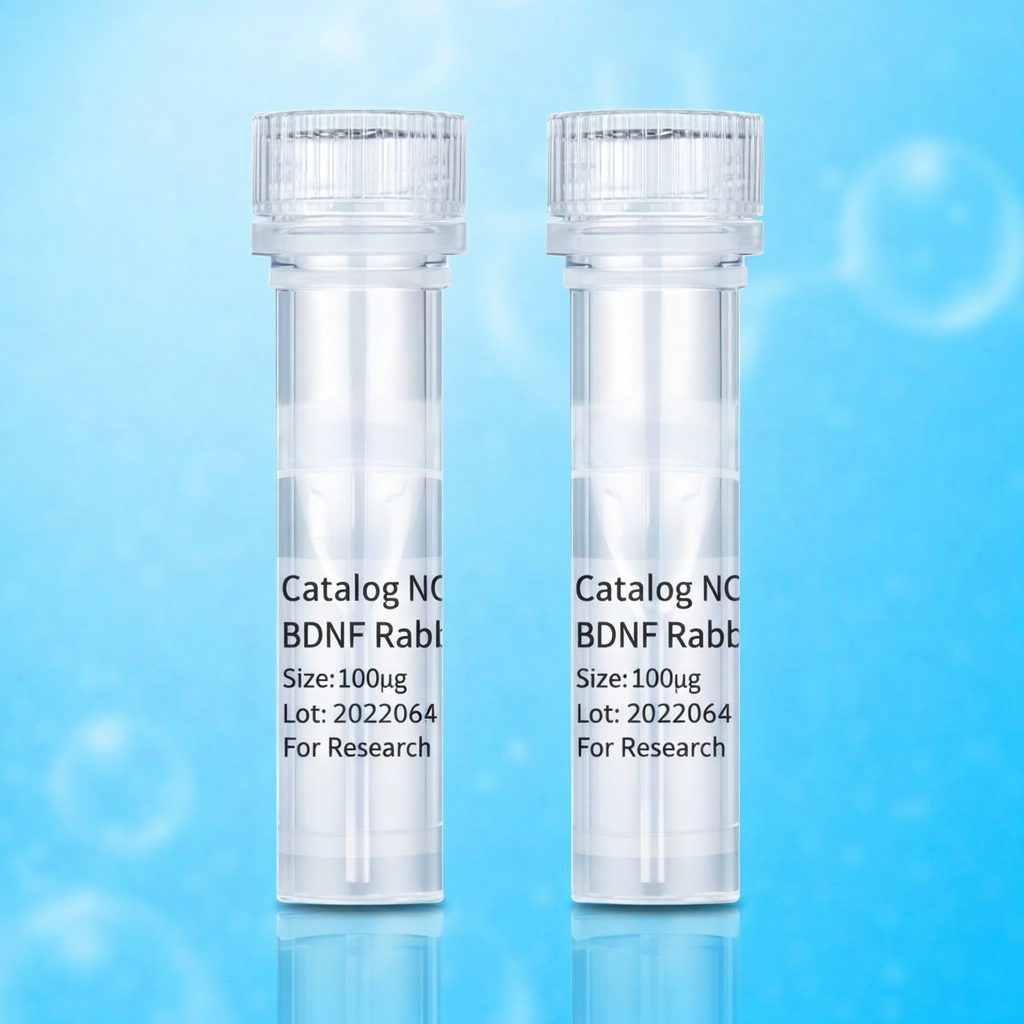
|
HO-1 Antibody |
|
Description |
Rabbit Polyclonal Antibody To HO-1 |
|
Mol.Wt |
33 kDa(Observed); 33kD(Calculated). |
|
Uniprot |
P09601 |
|
Application |
WB 1:500-1:2000, IHC 1:50-1:200 |
|
Clonality |
Polyclonal |
|
Specificity |
HO-1 Antibody detects endogenous levels of total HO-1. |
|
Conjugate |
Unconjugated. |
|
Purification |
The antiserum was purified by peptide affinity chromatography using SulfoLink™ Coupling Resin |
|
Storage |
Rabbit IgG in phosphate buffered saline , pH 7.4, 150mM NaCl, 0.02% sodium azide and 50% glycerol. Store at -20 °C. Stable for 12 months from date of receipt. |
|
Alternative Name |
32 kD; bK286B10; D8Wsu38e; heat shock protein 32 kD; heat shock protein 32kD; Heat shock protein; Heme oxygenase (decycling) 1; Heme oxygenase 1; Hemox; HMOX 1; Hmox; Hmox1; HMOX1_HUMAN; HO 1; HO; HO-1; HO1; Hsp32 |
|
Immunogen |
A synthesized peptide derived from human HO-1, corresponding to a region within the internal amino acids. |
|
Gene(ID) |
HMOX1(3162) |
|
Uniprot |
P09601(HMOX1_HUMAN) |
|
Expression |
P09601 HMOX1_HUMAN: Expressed at higher levels in renal cancer tissue than in normal tissue (at protein level). |
|
Description |
Heme oxygenase cleaves the heme ring at the alpha methene bridge to form biliverdin. Biliverdin is subsequently converted to bilirubin by biliverdin reductase. Under physiological conditions, the activity of heme oxygenase is highest in the spleen, where senescent erythrocytes are sequestrated and destroyed. |
|
Subcellular Location |
Microsome. Endoplasmic reticulum membrane>Peripheral membrane protein>Cytoplasmic side |
|
Tissue Specificity |
Expressed at higher levels in renal cancer tissue than in normal tissue (at protein level). |
|
Family & Domains |
Belongs to the heme oxygenase family. |
|
Function |
Heme oxygenase cleaves the heme ring at the alpha methene bridge to form biliverdin. Biliverdin is subsequently converted to bilirubin by biliverdin reductase. Under physiological conditions, the activity of heme oxygenase is highest in the spleen, where senescent erythrocytes are sequestrated and destroyed. Exhibits cytoprotective effects since excess of free heme sensitizes cells to undergo apoptosis. |