

Instruments
Showing 61–71 of 71 results
-
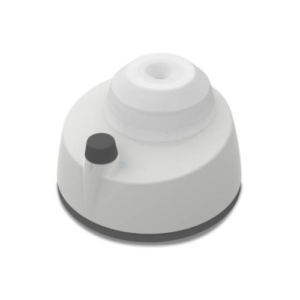
iSwix Jr. VT
Contact UsiSwix Jr. VT
Features
- Orbital diameter of 4.5mm
- Small footprint saves valuable bench space
- IP43 compliant design makes it suitable for use
- Variable Speed ranges from 2500 to 4500 RPM
- Enduring temperature from 5-40°C and humidity upto 80% ideal for work conducted in cold room and hoods
-
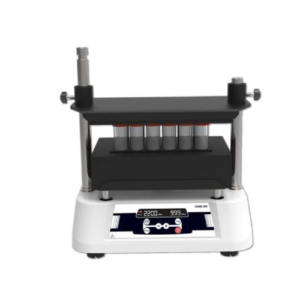
iSwix MV
Contact UsiSwix MV
Features
- Brushless DC motor for quiet operation and maintenance free long operation.
- Microprocessor controlled unit with digital display.
- Adjustable speed ranging from 300-2500 RPM with increment of 1 RPM and accuracy of +/-5 RPM with option of electing Clockwise (CW) and Counterclockwise (CCW) motion
- Long timer setting from 1 to 999 mins & infinite mode.
- Power Overload feature in which if the equipment consumes more power than its capacity, it automatically shuts down.
- Supplied with all six foam base attachments
-
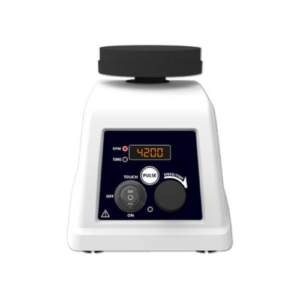
iSwix VT
Contact UsiSwix VT
Features
- Adjustable speed from 300 to 4200 RPM & timer setting
- Digital display – Shows speed and time alternatively at every 5 secs
- Unique programmable pulse mode function – User enabled run time and off time setting
- 3 way switch (On/Off/Touch) with Power On LED
- Orbital diameter of 4 mm
- Sticker indicator of permissible speed for various attachments
-
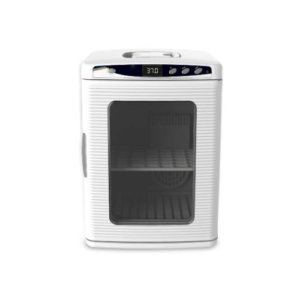
iTherm CH25
Contact UsiTherm CH25
Features
- Save Sample from Cross Contamination
- Easy To Move and Use at Different Locations
- Rapid Heating and Uniform Temperature Across the Block Throughout its Process
- Brings Down the Temperature and Eliminates the Need for a Compressor
- Comes with an inbuilt calibration function of up to ±5°C
-
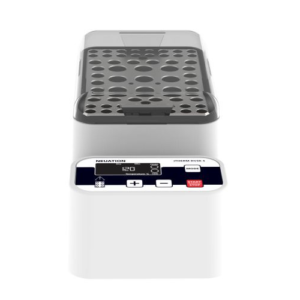
iTherm D150-1
Contact UsiTherm D150-1
Features
- Temperature range from +5 °C to 120°C
- Aluminium made block resistant to chemical spillage
- Large and clear display
- Risk Free operation with safe temperature protection
- Uniform temperature across the block
-
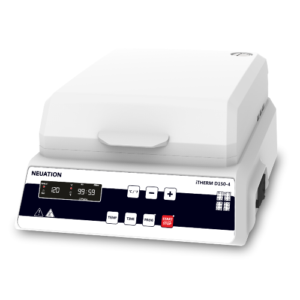
iTherm D150-4
Contact UsiTherm D150-4
Features
- Temperature range from +5 °C to 120°C
- Aluminium made block resistant to chemical spillage
- ±0.4 °C of Uniformity & ±0.5 °C stability across the blocks
- Lid for protection and heat preservation
- Auto start feature in case of power failure, resumes from the stop time
-

PCR Work Hood Large
Contact UsPCR Work Hood Large
Model Number BSOL-002 Shape Rectangular Material Plastic Dimension 60X60X70 cm Input Voltage 220/240 V Fuse 2A -
PCR Work Hood Tiny
Contact UsPCR Work Hood Tiny
Model Number BSOL-001 Filter Pre-Filter Shape Rectangular Material Plastic Dimension 50X40X60 cm Speed Range (rpm) 200 Input Voltage 220/240 V, 50Hz Fuse 2A -
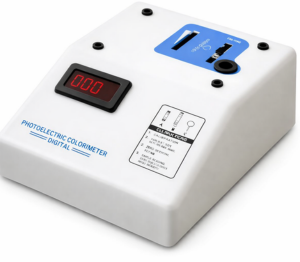
Photoelectric Colorimeter
Contact UsPhotoelectric Colorimeter
Features
- Our Model Photic-10 is the finest Photoelectric Colorimeter that combine convience in operation with high precision & accuracy in analysis.
- Eight imported optical glass filters covering complete visible range of 400 – 700nm are mounted on a rotating disc. Its all imported filters makes it highly accurate as per international standards.
- Highly sensitive photo sensor & use of latest IC technology makes the instrument highly rugged, and economical in maintenance.
- A minimum sample volume of 1ml is required to carry out the analysis.
- Provision has been made to switch on the lamp source only when required, thereby increasing the life of the photodiode.
-
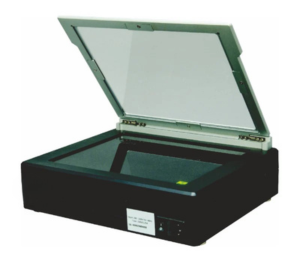
U.V. Transilluminator (college Model)
Contact UsU.V. Transilluminator (college Model)
Features
- Transilluminator model UV-365, UV-254 & UV-254/365nm are required in biotechnology, Molecular Biology applications in colleges, Universities, Research Institutes
- These are college model transilluminators having detection limit minimum 200ng. These models available are as under.
-
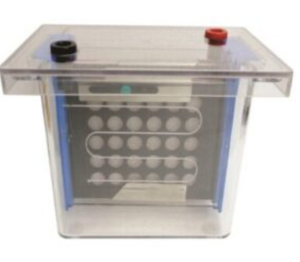
Western Blotting System
Contact UsWestern Blotting System
Features
- Western Or Immuno Blotting is the transfer of separated Proteins in a gel to the surface of a thin support membrane matrix.
- The Proteins are bound and immobilized on the membrane.
- Southern and Northern blotting involves the transfer of separate DNA and RNA, respectively, from a gel to a membrane
- To perform a transfer, the gel is layered next to a membrane and placed in a voltage gradient perpendicular to the gel.
- Negatively charged molecules will migrate out from the gel, move towards the positive electrode, and get deposited on the membrane.