

| Features | Specifications |
| Main Functions | Isolation total DNA from 200ul Whole Blood |
| Applications | PCR, southern bolt and virus detection, etc |
| Purification method | Mini spin column |
| Purification technology | Silica technology |
| Process method | Manual (centrifugation or vacuum) |
| Sample type | Whole Blood (fresh or frozen), serum, plasma, milk, saliva, and other liquid samples and cultured cells |
| Sample amount | <200μl whole blood or other liquid samples, <5*106 lymphocytes or Culture Cells |
| Non mammalian animals that have nucleus in red blood cells (rich in DNA, such as birds and fish) : 5~20μl whole blood at a time | |
| Elution volume | ≥20μl |
| Time per run | ≤30 minutes |
| Liquid carrying volume per column | 800µl |
| Binding yield of column | 100µg |
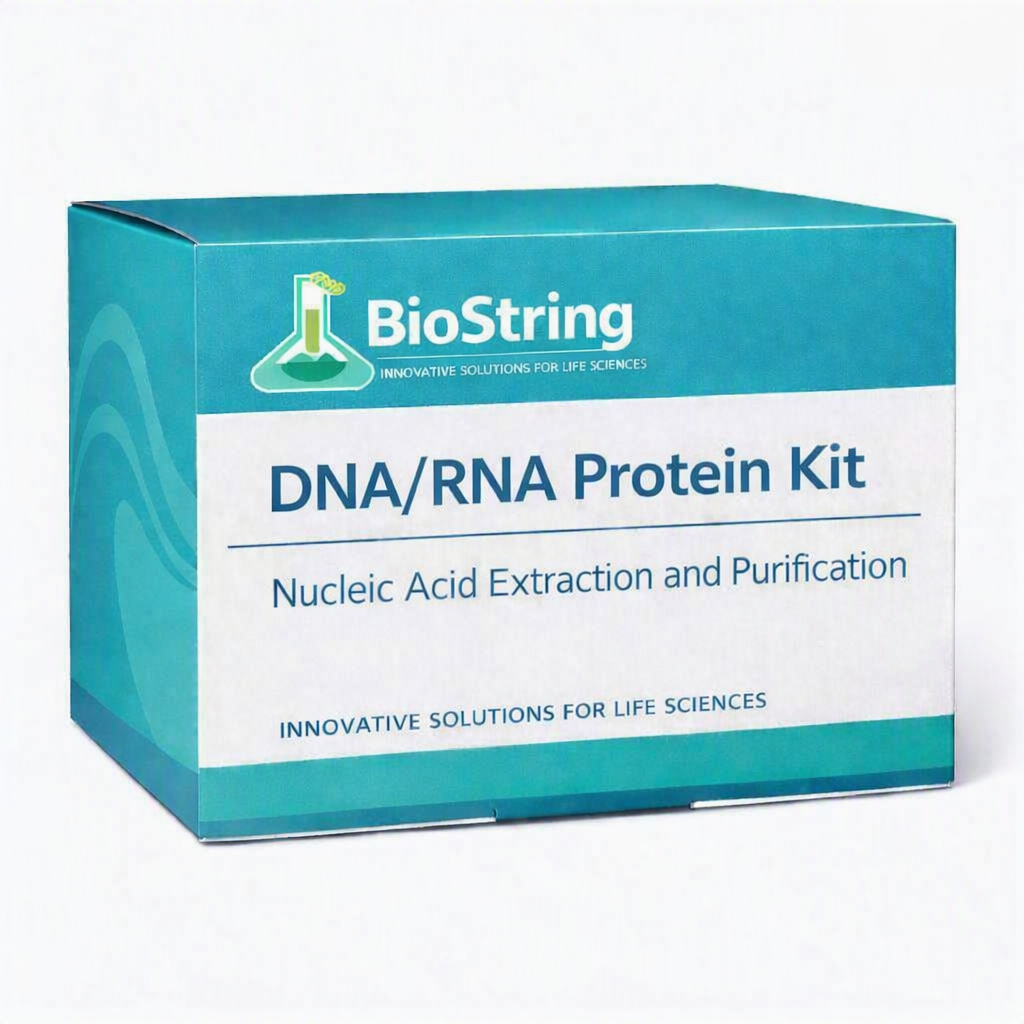
BioString Blood DNA Mini Kit
| Catalogue No | BS-DNA-027 |
| Product Name |
BioStringTM Blood DNA Mini Kit |
| Size | 50 Preps | 250 Preps |
| Price | POR |
Blood samples contain multiple sources of DNA, including genomic DNA from leukocytes, mitochondrial DNA, circulating DNA released from apoptotic cells, and DNA originating from viruses or microorganisms present in blood. These nucleic acids are important targets for molecular diagnostics and are widely used in research workflows such as PCR amplification, genotyping analysis and HLA typing studies.
However, genomic DNA purification from blood samples presents several technical challenges. Blood is a potentially infectious biological material, which requires safe handling during sample preparation. In addition, blood contains complex components and inhibitory substances that may interfere with downstream molecular analysis. Traditional DNA extraction methods such as phenol–chloroform extraction or salting-out procedures typically require pre-processing steps to separate leukocytes by removing red blood cells. During this process, pathogens may remain active in the waste lysate, posing potential risks to laboratory operators and the environment. Furthermore, nucleic acids present outside leukocytes, including circulating DNA, viral DNA or microbial DNA, may be partially lost during red blood cell removal.
The BioStringTM Blood DNA Mini Kit developed by BioString uses optimized silica membrane spin column purification technology that allows direct lysis of whole blood samples without the need for leukocyte separation. Whole blood is directly mixed with lysis buffer and protease, enabling efficient digestion of biological components while inactivating pathogens during the extraction process. This workflow simplifies sample preparation and improves laboratory safety.
The system supports purification from approximately 200–250μL anticoagulated whole blood and produces high-quality genomic DNA suitable for PCR amplification, genotyping workflows and HLA typing applications. The spin column format enables rapid purification using standard laboratory centrifuges and integrates easily into routine molecular biology workflows.
Internal validation experiments using anticoagulated human whole blood samples demonstrated stable genomic DNA purification across multiple samples. Using approximately 250 μL blood, typical DNA yields ranged from 6–10 μg, with purity ratios A260/280 around 1.8–1.9, indicating high-quality genomic DNA suitable for downstream molecular applications.
Agarose gel electrophoresis analysis showed intact high-molecular-weight genomic DNA bands without detectable degradation, confirming suitability for PCR amplification and genotyping analysis.
Comparative testing against several commonly used commercial column-based DNA purification systems demonstrated comparable DNA yield and purity, supporting reliable performance in routine molecular biology workflows.
Proteinase K should be stored at 2–8°C upon arrival. However, short-term storage (up to 12 weeks) at room temperature (15–25°C) does not affect their performance. The remaining kit components can be stored at room temperature (15–25°C) and are stable for at least 18 months under these conditions.