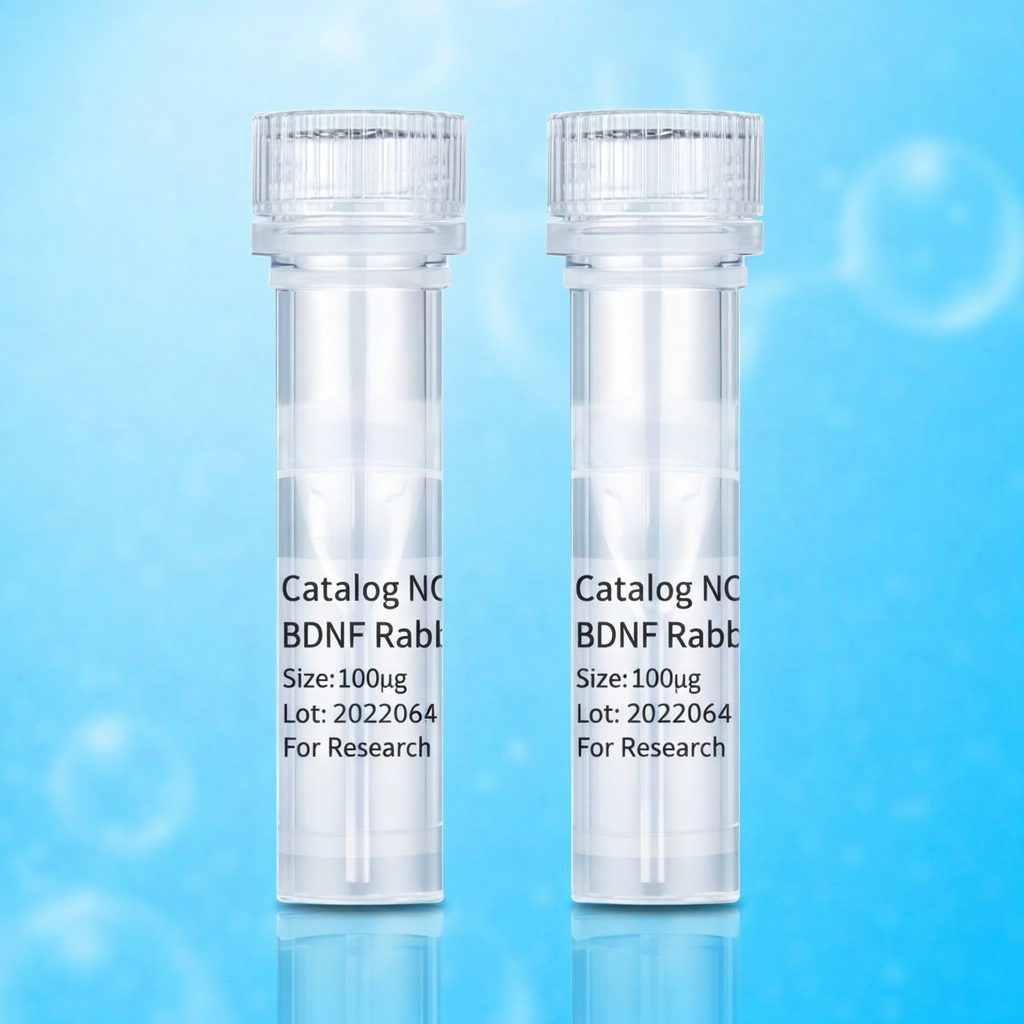
|
Nrf2 Antibody |
|
Description |
Rabbit Polyclonal Antibody To Nrf2 |
|
Mol.Wt |
100~120kD(Observed); 68kD(Calculated). |
|
Uniprot |
Q16236 |
|
Application |
WB 1:500-1:2000, IHC 1:50-1:200, IF/ICC 1:100-1:500 |
|
Prediction |
Pig(100%), Bovine(%), Horse(%), Rabbit(%), Dog(%), Chicken(%) |
|
Clonality |
Polyclonal |
|
Specificity |
Nrf2 Antibody detects endogenous levels of total Nrf2. |
|
Conjugate |
Unconjugated |
|
Purification |
The antiserum was purified by peptide affinity chromatography using SulfoLink™ Coupling Resin. |
|
Storage |
Rabbit IgG in phosphate buffered saline , pH 7.4, 150mM NaCl, 0.02% sodium azide and 50% glycerol. Store at -20 °C. Stable for 12 months from date of receipt. |
|
Alternative Name |
erythroid derived 2; HEBP1; like 2; NF E2 related factor 2; NF-E2-related factor 2; NF2L2_HUMAN; NFE2 related factor 2; NFE2-related factor 2; Nfe2l2; Nrf 2; NRF2; Nuclear factor (erythroid derived 2) like 2; Nuclear factor; nuclear factor erythroid 2 like 2; Nuclear factor erythroid 2 related factor 2; Nuclear factor erythroid 2-related factor 2; Nuclear factor erythroid derived 2 like 2 |
|
Immunogen |
A synthesized peptide derived from human Nrf2, corresponding to a region within N-terminal amino acids. |
|
Gene(ID) |
NFE2L2(4780) |
|
Uniprot |
Q16236(NF2L2_HUMAN) |
|
Expression |
Q16236 NF2L2_HUMAN: Widely expressed. Highest expression in adult muscle, kidney, lung, liver and in fetal muscle. |
|
Description |
GABPA Transcription factor capable of interacting with purine rich repeats (GA repeats). Necessary for the expression of the Adenovirus E4 gene. Belongs to the ETS family. Heterotetramer of two alpha and two beta subunits. |
|
Subcellular Location |
Cytoplasm>Cytosol. Nucleus. |
|
Tissue Specificity |
Widely expressed. Highest expression in adult muscle, kidney, lung, liver and in fetal muscle. |
|
Family & Domains |
The ETGE motif, and to a lower extent the DLG motif, mediate interaction with KEAP1. Belongs to the bZIP family. CNC subfamily. |
|
PTMs |
Ubiquitinated in the cytoplasm by the BCR(KEAP1) E3 ubiquitin ligase complex leading to its degradation. In response to oxidative stress, electrophile metabolites, such as sulforaphane, modify KEAP1, leading to inhibit activity of the BCR(KEAP1) complex, promoting NFE2L2/NRF2 nuclear accumulation and activity. In response to autophagy, the BCR(KEAP1) complex is inactivated (By similarity). Phosphorylation of Ser-40 by PKC in response to oxidative stress dissociates NFE2L2 from its cytoplasmic inhibitor KEAP1, promoting its translocation into the nucleus. Acetylation at Lys-596 and Lys-599 increases nuclear localization whereas deacetylation by SIRT1 enhances cytoplasmic presence. Glycation impairs transcription factor activity by preventing heterodimerization with small Maf proteins. Deglycation by FN3K restores activity. |
|
Function |
Transcription factor that plays a key role in the response to oxidative stress: binds to antioxidant response (ARE) elements present in the promoter region of many cytoprotective genes, such as phase 2 detoxifying enzymes, and promotes their expression, thereby neutralizing reactive electrophiles. In normal conditions, ubiquitinated and degraded in the cytoplasm by the BCR(KEAP1) complex. In response to oxidative stress, electrophile metabolites inhibit activity of the BCR(KEAP1) complex, promoting nuclear accumulation of NFE2L2/NRF2, heterodimerization with one of the small Maf proteins and binding to ARE elements of cytoprotective target genes. The NFE2L2/NRF2 pathway is also activated in response to selective autophagy: autophagy promotes interaction between KEAP1 and SQSTM1/p62 and subsequent inactivation of the BCR(KEAP1) complex, leading to NFE2L2/NRF2 nuclear accumulation and expression of cytoprotective genes. May also be involved in the transcriptional activation of genes of the beta-globin cluster by mediating enhancer activity of hypersensitive site 2 of the beta-globin locus control region. |